
Deciding whether to operate on a gallbladder polyp involves its shape, changes from earlier tests, findings in the gallbladder wall, and your overall health, as well as its size. Finding a polyp during a health check does not mean that surgery is needed immediately. At Damsoyu Hospital, we consider the imaging findings and your individual condition, then explain why monitoring or surgery is recommended rather than relying on one size cutoff alone.
Consider the polyp's size and shape together
A gallbladder polyp is a lesion that projects from the inner wall of the gallbladder. Ultrasound is used to assess its size and shape and the surrounding wall, with previous images compared when needed. Even at the same size, a broad-based shape, thickening of the nearby wall, or clear growth may affect the assessment.
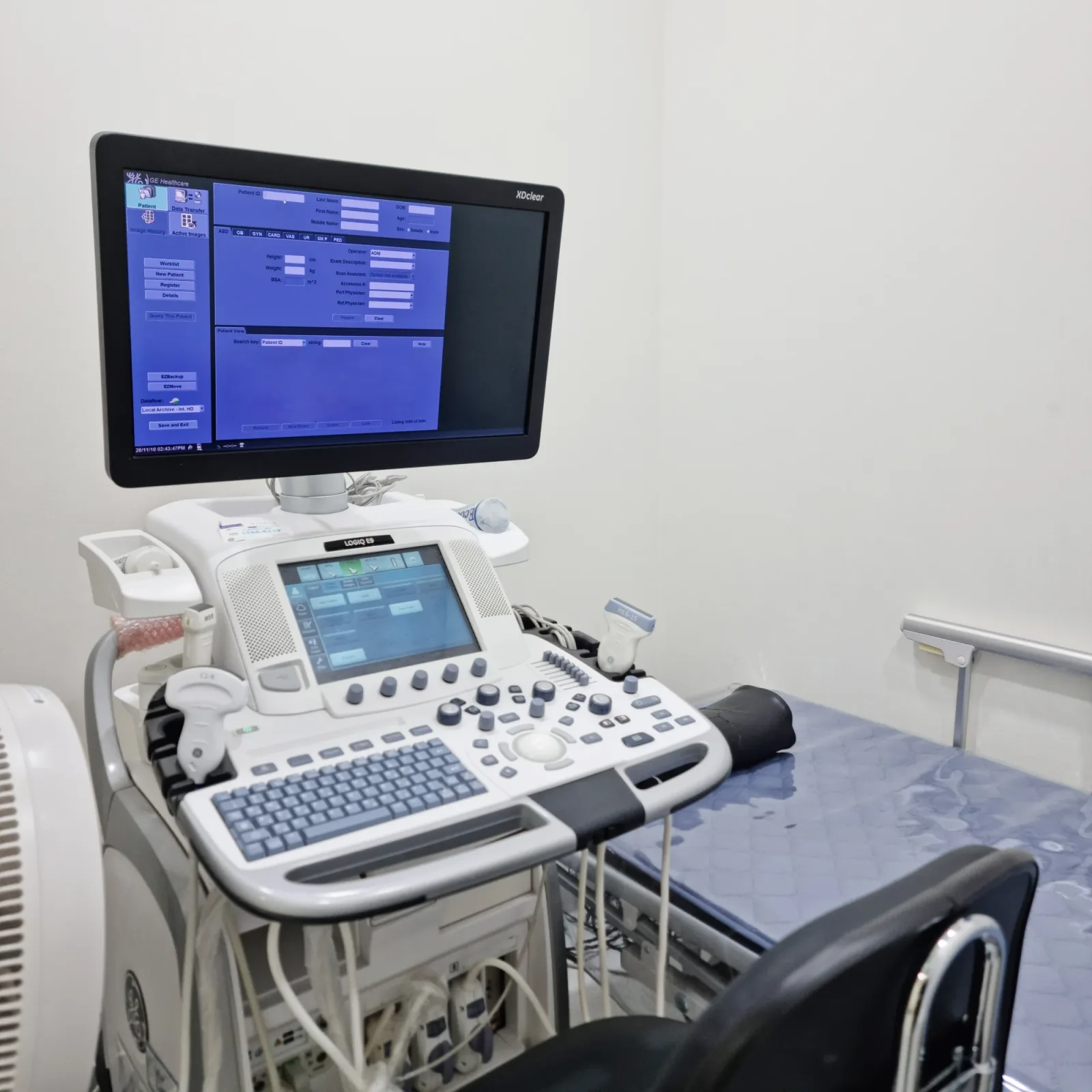
The presence of a gallbladder polyp does not by itself mean cancer. Equally, a small size is not a reason to disregard all other findings. During the consultation, we explain the features seen on imaging and the risk factors relevant to you.
What do the 2025 gallbladder polyp recommendations say?
For patients who are fit for surgery, the Korean Society of Abdominal Radiology's 2025 recommendations favor cholecystectomy over ultrasound follow-up for polyps measuring 15 mm or more, or polyps measuring 10–14 mm with concerning imaging features. Those features include thickening of the adjacent gallbladder wall, a broad-based shape, and clear growth.
For a 10–14 mm polyp without those features, surgery and ultrasound monitoring are options to consider. These recommendations focus on the assessment of incidentally detected lesions. They should not be applied without adjustment to patients with symptoms or particular high-risk conditions for gallbladder cancer. The scope of the original 2025 Korean Society of Abdominal Radiology recommendations matters when interpreting them.
These measurements are not a self-assessment tool for deciding whether you need an operation. In practice, we also consider symptoms, other test findings, and whether your health allows you to undergo surgery.
Bring earlier images if the findings have changed
During follow-up, comparing the earlier images themselves can help alongside the size recorded on the new report. Note when and where the tests were performed, and check whether you can bring the reports and images. A small change in the measurement does not establish that the condition has worsened; ask whether it reflects measurement variation or a meaningful change.
You may find the following questions useful during the consultation.
- Apart from size, which features of my polyp need attention?
- Is there a genuine change compared with the previous test?
- If we monitor it, when should the next test take place and what should prompt another consultation?
- If surgery is recommended, why is it advised now, and what are the expected benefits and risks?
What do we discuss during gallbladder consultations at Damsoyu Hospital?
At Damsoyu Hospital, a hepatobiliary-pancreatic surgery specialist personally assesses you and performs the operation. We use a single-port laparoscopic approach for gallbladder surgery. We do not start by choosing an operation simply because a polyp is present. We first explain whether the findings support surgery and then discuss an appropriate treatment plan. See our gallbladder polyp information.
Cholecystectomy removes the gallbladder, rather than just removing a polyp. If surgery has been recommended, ask about that distinction and the changes you may expect afterward. Gather your existing test records before your visit and tell us through our consultation request that the polyp was found during a health check. Our gallbladder and gallstone guide explains the surgical process.
Related Damsoyu guides
DAMSOYU / Gallbladder care
Explore the care behind this guide
Make sense of your scan results, a surgical consultation and care after treatment.
Explore treatment →Information to help you prepare for a consultation. Your care plan is determined after a medical assessment.
The booking page is in Korean. Please confirm your preferred consultation language with the hospital.
Confirm your consultation language and appointment arrangements before travelling.